
Call Your Mortgage Servicer
Explain why you are having difficulty, whether the hardship appears temporary or long term, and ask what mortgage-assistance options are available.
If you are struggling with mortgage payments or think you may fall behind, acting early can give you more time to understand your options. Preventing foreclosure often starts with contacting your mortgage servicer, reviewing your finances, gathering documents and asking what loss-mitigation programs may be available.
This guide expands on the original article with a practical action plan for homeowners while keeping the focus on education—not promising that one solution will work for every mortgage or every household.
Foreclosure is the legal process a mortgage lender or servicer may use when a borrower remains in default and the loan is not otherwise resolved. The exact process and timeline depend on the mortgage, federal servicing rules and applicable state law.
The older version of this article described a fixed 90-day Notice of Default timeline. That is too broad. For many mortgages covered by federal servicing rules, a servicer generally cannot make the first notice or filing required to begin foreclosure until the borrower is more than 120 days delinquent. What happens after that point can vary, which is why homeowners should not wait for a specific day count before asking for help.
The Consumer Financial Protection Bureau recommends contacting your mortgage servicer as soon as you know you may have difficulty making a payment. A servicer may be able to evaluate you for options intended to prevent foreclosure, often called loss mitigation.
Important: This page is general educational information, not legal, tax or financial advice. If a foreclosure sale is scheduled, you have received legal papers, or you are unsure about your rights, consider contacting a qualified Alabama attorney or a HUD-approved housing counselor promptly.
You do not need to wait until several payments are missed. If your income has changed or you already know the next payment may be difficult, start gathering information and contacting the people who can explain your available options.
Explain why you are having difficulty, whether the hardship appears temporary or long term, and ask what mortgage-assistance options are available.
Record dates, names, reference numbers, deadlines and documents requested during every important conversation with your servicer.
Prepare information about income, expenses, bank balances, hardship circumstances and the mortgage so you can respond quickly to application requests.
A HUD-approved housing counselor can help you understand the process and work through mortgage-assistance paperwork at little or no cost.
Do not ignore letters, emails or calls from your mortgage servicer. Deadlines may become important if the loan is already delinquent.
Keeping the home, modifying the loan, selling voluntarily or another solution may have different financial and legal consequences.
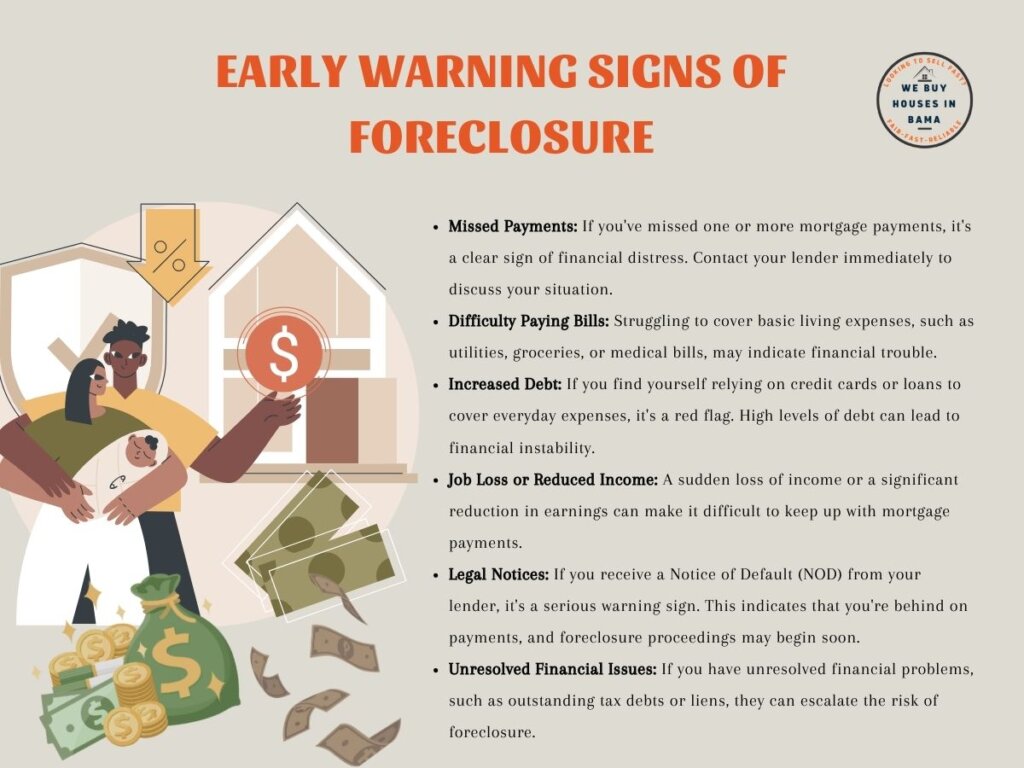
Foreclosure risk can develop after an unexpected change in household finances. The original article identified several common triggers, and recognizing them early can help homeowners respond before missed payments accumulate.
If housing costs are becoming difficult to manage, review the complete household budget rather than looking at the mortgage in isolation. Our article on hidden home-selling costs in Alabama can also help when comparing the financial impact of keeping versus selling a property.
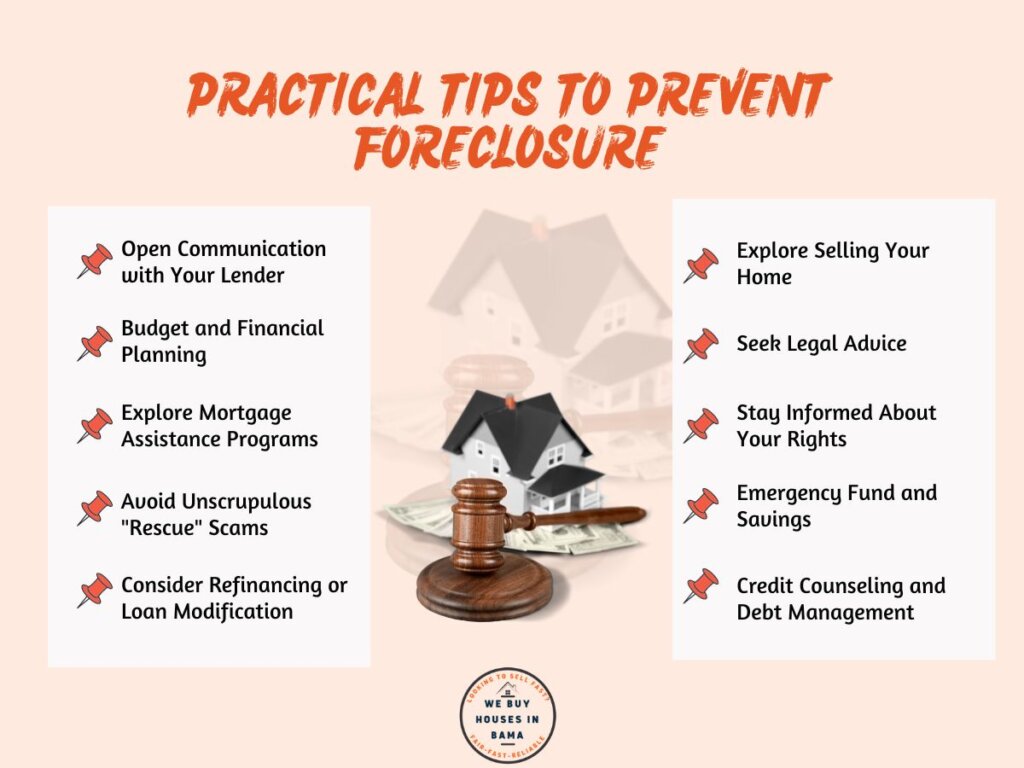
No single strategy guarantees that foreclosure can be prevented, but these steps can improve communication, reduce delays and help you understand what choices may be available.
Contact the company that receives your mortgage payments as soon as you know there may be a problem. Explain the hardship and ask what information is required to be evaluated for assistance.
List income, required living expenses, mortgage obligations and other debts. Identify expenses that can be reduced temporarily and determine whether the mortgage is affordable under your current income rather than your former income.
Depending on the mortgage and your circumstances, a servicer may consider options such as forbearance, a repayment plan, loan modification, refinance, short sale or deed-in-lieu of foreclosure. Availability and eligibility vary.
Mortgage-assistance reviews often require a complete application and supporting documents. Responding quickly can matter, especially if the account is already seriously delinquent or a sale date has been scheduled.
HUD-approved counselors can help homeowners understand available options and communicate with mortgage servicers. Use HUD’s housing counseling resources rather than relying on an unverified company that charges large upfront fees.
Be cautious if someone guarantees they can stop foreclosure, asks you to pay a large fee before providing help, tells you to stop communicating with your servicer or asks you to sign documents you do not understand.
A short-term income interruption may require a different solution than a permanent affordability problem. Be clear with your servicer and counselor about whether you expect your income to recover.
If keeping the property is no longer realistic, selling voluntarily may be one option to investigate before foreclosure advances further. Review your mortgage payoff, likely selling costs, estimated property value and timeline before deciding. Market conditions can also affect the feasibility of selling your home.
If you have received legal papers, dispute the amount owed, have a scheduled foreclosure sale or need advice about Alabama law, consider speaking with a qualified attorney. A general article cannot determine your legal rights in a specific case.
Save mortgage statements, notices, applications, uploaded documents, confirmation numbers, emails and notes from phone calls. Organized records can make it easier to respond to requests and identify missed or conflicting information.
These are common terms used in foreclosure-prevention discussions. They are not guaranteed offers, and the terms available to you depend on your loan, servicer, investor and financial circumstances.
CFPB guidance recommends calling your mortgage servicer directly and completing any mortgage assistance application it provides. A HUD-approved counselor can also help you understand the options your servicer presents.
Requirements vary, but preparing your basic mortgage and financial information can reduce back-and-forth when a servicer or counselor asks questions about your hardship.
Recognizing financial pressure before the foreclosure process advances gives you more time to communicate, gather documents and compare options. The original article highlighted several warning signs worth watching.
Foreclosure can affect much more than ownership of the property. The outcome varies by loan and household, but possible consequences can include relocation costs, credit damage, financial uncertainty and significant stress.
CFPB guidance warns that homeowners in distress are frequently targeted by foreclosure-rescue scams. Free or low-cost help is available from mortgage servicers and HUD-approved housing counselors, so be wary of pressure tactics and guarantees.
See the CFPB’s foreclosure-prevention guidance for additional scam warning signs.
Some foreclosure-prevention options are designed to help a homeowner remain in the property. Others may help a homeowner leave the property without completing a foreclosure. If the mortgage is no longer affordable, a voluntary sale may be one option to investigate, but it should be evaluated against your payoff amount, equity, property condition, likely selling costs and available time.
This article intentionally does not turn that question into a sales pitch because its primary purpose is foreclosure-prevention education. For the site’s more direct foreclosure-help information, see our guide to avoiding foreclosure. If you are comparing a traditional listing with other ways to sell, review the numbers and deadlines carefully before making a decision.
If you need advice about the legal effect of a pending foreclosure or sale, speak with an appropriate professional who can review your specific situation.
These answers provide general education. Mortgage programs, deadlines and legal rights can differ depending on the loan and the homeowner’s circumstances.
No. CFPB guidance recommends contacting the mortgage servicer as soon as you know you may have difficulty making a payment.
Loss mitigation is the term used for options a mortgage servicer may evaluate to address delinquency and avoid foreclosure. Possible options vary by loan and borrower.
HUD-approved housing counseling agencies can provide foreclosure and mortgage counseling. HUD provides an official counselor-finding service.
For many mortgages subject to federal servicing rules, the servicer generally cannot make the first notice or filing required for foreclosure until the borrower is more than 120 days delinquent. Exceptions and state-law processes can apply.
No. Depending on eligibility and circumstances, homeowners may encounter options such as repayment plans, forbearance, loan modifications, refinance, short sales or deed-in-lieu.
Act promptly. Contact the servicer, consider a HUD-approved housing counselor and speak with a qualified attorney if you need advice about your rights or deadlines.
Homeowners facing mortgage trouble have more useful information to work with when they communicate early, complete requested paperwork, understand the options offered by the servicer and use qualified counseling or legal help when appropriate.
The most important practical lesson is not to ignore the problem. A missed payment, reduced income or mortgage notice is a reason to get organized and ask questions—not a reason to wait until the foreclosure process is further along.
Start with your mortgage servicer and, when appropriate, a HUD-approved counselor or qualified attorney. If selling the property becomes one of the options you want to compare, We Buy Houses In Bama can also explain its property-buying process without changing the educational purpose of this guide.
View Foreclosure Help Options Call (256) 607-4109