
You may be able to sell a house with unpermitted renovations in Alabama, but the missing paperwork can affect inspections, financing, insurance, negotiations, and the buyer’s willingness to proceed. Start by determining whether the work actually needed a permit in the property’s city or county. Then ask the local building authority what records or inspections are available. Depending on the work, you might correct the issue, obtain appropriate approvals, negotiate repairs, or sell in its current condition. Do not describe work as “approved” unless you can verify that claim.
What counts as unpermitted renovation work?
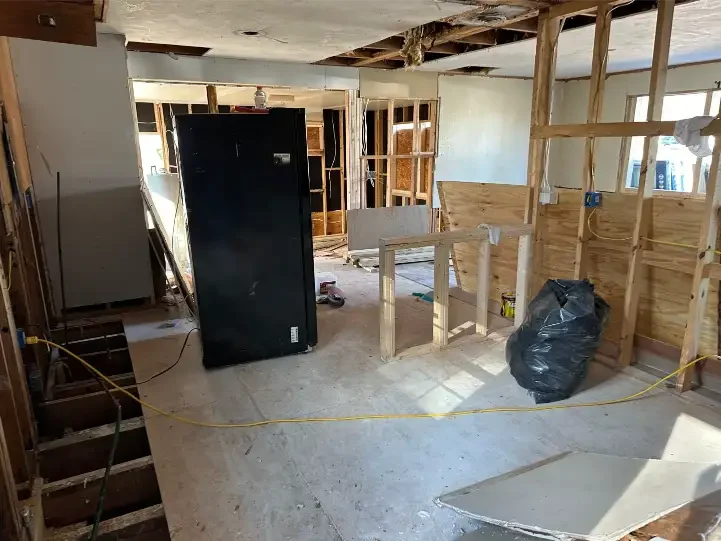
An unpermitted renovation is work completed without a permit that the applicable authority required at the time. A related problem is a permit that was obtained but never closed out after the required inspection. These two situations are not identical, and either may need more investigation before listing or closing.
Examples that can raise questions include removing a load-bearing wall, adding a bedroom or bathroom, altering electrical circuits, replacing major plumbing, extending a roofline, or converting enclosed space into living area. Not every cosmetic improvement requires the same permits. Painting cabinets and installing new light fixtures, for example, can have different requirements from structural alterations or electrical rewiring.
Alabama does not have one universal municipal building-permit office. Requirements depend on the jurisdiction, building type, adopted code, and nature of work. For example, Baldwin County’s permitting guidance describes its rules and exceptions; another county or city may apply different procedures. Always ask the authority that actually governs your property’s location.
How to check permit history before you sell
First, locate the address and legal description, and identify whether the property is inside city limits or in an unincorporated part of a county. Contact the relevant planning, inspections, or building office using its official public website. Ask what construction permits and final inspections exist for the property and whether the office has an online records portal.
Next, make a list of work done during your ownership and work you know about from previous owners. Include approximate dates, contractor names if known, invoices, photos, plans, and any inspection cards. Separate what you know from what you suspect. You may have no way of confirming whether an old renovation was legally permitted when it was completed.
If work appears to lack approval, ask the authority which options exist. It may require an inspection, plans, correction of deficiencies, opening a concealed area for examination, or other steps. Some situations cannot be resolved simply by paying a fee; the work may fail current safety requirements. Do not promise a buyer that a retroactive permit is guaranteed.
Why missing permits can complicate a home sale
Buyers may question safety and workmanship
A renovation may look attractive yet conceal wiring, framing, drainage, or ventilation issues. Buyers and inspectors may ask whether the work was performed by qualified professionals and inspected where required. An absence of documents does not automatically prove dangerous construction, but it reduces the evidence available to support a claim that the job was completed correctly.
Financing and appraisal questions may arise
A financed buyer may face additional lender or appraisal conditions when the property description, room count, or usable area does not match public records. The impact depends on the loan program, property, and lender; it is not accurate to say every house with an unpermitted alteration is impossible to finance.
Insurance and future renovation work can become harder
Insurers assess risk, and unapproved or incorrectly installed work can become relevant during underwriting or a claim. Future contractors may also discover the issue when applying for new permits. Ask your insurer about your own policy rather than assuming coverage will automatically be denied or that a later buyer inherits the same coverage.
Pricing becomes a negotiation, not a fixed penalty
There is no dependable statewide discount to apply to every unpermitted renovation. The effect on an offer depends on the work involved, how easily it can be inspected or corrected, the local market, the buyer’s financing, and the actual estimated cost of remedying the issue.

Four practical routes to a sale
Option 1: Verify the permit exists or the work was exempt
Sometimes the apparent problem is a records mismatch, a permit filed under an old address, or work that did not require a permit. Get the authority’s response in writing where possible. Do not ask a contractor or real estate agent to certify a government permit they cannot see.
Option 2: Have the work reviewed and correct what is necessary
If substantial structural or safety work is involved, an appropriately qualified contractor, engineer, or licensed specialist can help evaluate the condition. Ask the permit office whether an inspection and correction path is available before paying for substantial changes. Compare the likely time, cost, and disruption with your selling deadline.
Option 3: Disclose known facts and negotiate with a traditional buyer
A buyer may accept the issue, request repairs, require a price adjustment, or decline. A written contract should state what is being sold, what work the seller has agreed to perform, and whether any inspection or financing contingency applies. The parties’ lawyer and closing professional can advise how to document an unresolved permit issue.
Option 4: Consider an as-is offer
Some buyers may evaluate a house with unresolved work and propose buying without asking the seller to complete repairs first. That does not remove safety obligations or guarantee that title, insurance, lender, or contractual questions disappear. Read the terms, confirm the buyer’s ability to close, and compare the net result with the cost of correcting the work yourself.
For a wider comparison of how owners approach distressed houses, visit our guide to selling a damaged house in Alabama. That article addresses property condition generally; this one is specifically about missing construction approvals.
What does Alabama law require sellers to disclose?
Alabama generally follows the principle of caveat emptor, or “buyer beware,” for sales of existing residential property. However, the rules are not a license to lie about permit history, conceal known problems, or disregard disclosure duties that arise from particular facts. Alabama courts recognize exceptions involving direct questions and certain latent health or safety conditions, and contractual wording can matter. See the Alabama REALTORS’ discussion of disclosure exceptions.
The sensible approach is to provide accurate answers to questions about renovations and to avoid unverified claims such as “all work permitted” or “everything up to code.” Get advice from an Alabama real estate attorney about what the law and your particular contract require.
Federal lead-based-paint disclosure rules are a separate issue for most pre-1978 housing. A house being sold as-is does not automatically remove those federal requirements; see the EPA’s seller disclosure guidance.
Questions to ask before accepting an offer
- Which specific improvement lacks a permit or final inspection, and who has confirmed that?
- Does the local building office require corrective action before occupancy or transfer?
- Has a licensed professional identified a safety problem or only a documentation gap?
- What must be done, if anything, to satisfy the buyer’s lender or insurance provider?
- Who pays for any agreed inspection, correction, or follow-up paperwork?
- What happens if the work cannot be approved before the proposed closing date?
Keep the answers in the transaction file. An explicit agreement is better than an unwritten assumption about who will make repairs after closing.
Frequently asked questions
Can you sell a house with an unpermitted bedroom in Alabama?
Possibly. Verify whether the conversion required approval, whether the room meets applicable safety requirements, and how the buyer and lender will treat the space. Do not advertise it as a legal bedroom without support.
Can a buyer accept the house as-is?
A buyer may agree to purchase property in its existing condition, but an as-is agreement does not guarantee that unresolved governmental, financing, or title issues can be ignored. The exact terms and local rules control.
Must sellers always get retroactive permits before closing?
There is no universal answer for all Alabama properties. Ask the responsible city or county building department what the specific work requires, and ask your closing professional whether any unresolved issue prevents the contemplated sale.
Should you renovate more before listing?
Not automatically. If the priority is value rather than fixing existing unpermitted work, see our separate Alabama renovation and resale-value guide. Do not spend on new improvements until the permit problem is understood.
Explore your Alabama selling options
If you prefer to discuss an as-is sale rather than commission additional renovation work, you can request a conversation about a cash offer for your Alabama house. Bring the permit information you have, even if incomplete, and compare any written offer with your other options before deciding.
Editorial note: This is general real estate information, not legal, engineering, building-code, or insurance advice. Permit requirements vary by jurisdiction and can change; consult the local building authority and qualified professionals.