
You can verify a cash home buyer’s proof of funds in Alabama by asking for current, relevant financial evidence, confirming the buyer’s legal name, and involving an independent closing professional before you rely on a promised cash offer. A dated bank or financial-institution letter may help, but a screenshot alone does not guarantee that the money exists or will be available at closing. The goal is to confirm who will buy the property, how the purchase will be financed, and what the contract requires if the buyer cannot deliver the funds.

What is proof of funds for a cash home purchase?
Proof of funds is information showing that a buyer has access to enough funds to complete a proposed purchase. It might be a current letter from a bank or investment custodian, a suitably redacted account statement, or documentation of money already deposited with a closing professional. The document should make practical sense for the transaction: an Alabama house under a $200,000 contract requires different evidence from an offer of $60,000.
Not every bank will confirm account balances directly to strangers, and a seller should not demand unrestricted access to a buyer’s personal records. A legitimate buyer may reasonably redact an account number or unrelated transactions. Ask the buyer or their representative what document can verify funds without exposing confidential information.
The most useful proof names the account holder or purchasing entity, identifies the issuing institution, gives a date, and supports the amount needed for the purchase. Ask whether the money is cash or a line of credit that depends on another approval. A letter saying someone is a valued customer is not the same as evidence of available purchase funds.
Proof of funds versus a preapproval letter
A mortgage preapproval generally indicates that a lender has preliminarily reviewed a potential borrower’s financial position. It does not necessarily mean the buyer can close without financing, and it can remain subject to underwriting, appraisal, property and other conditions. A proof-of-funds letter may show available money, but it is not itself a bank guarantee that the money will be transferred.
For an offer described as an all-cash purchase, ask whether there is a loan contingency or whether the buyer intends to obtain financing after signing. A buyer who uses private financing may still be able to close quickly; that is a different transaction from one funded entirely by money already on deposit. Describe it accurately in the contract rather than arguing over whether the buyer deserves the label ‘cash buyer.’
What should an Alabama seller request?
Start with a written offer showing the full purchasing name, property address, proposed price, earnest-money terms, inspection or assignment rights, and expected closing date. Then request a dated proof-of-funds document appropriate to that price. Check that the purchasing entity in the contract matches the entity or person whose funds are being presented, or obtain a clear explanation of the relationship.
When a company or limited liability company is the purchaser, ask who has authority to sign. A business name on a marketing postcard does not necessarily tell you which legal entity will appear on the deed. You can ask the company for its official details and ask the closing attorney to confirm the contracting parties.
Do not post a buyer’s bank letter online or forward account details to other bidders. The seller’s attorney or settlement professional can suggest a secure way to review sensitive financial evidence. Some buyers may not share a full account statement directly with a seller; a satisfactory professional verification route is a reasonable alternative.
A cash buyer, private-lender buyer and wholesaler are not identical
A direct cash investor might purchase the house using its own available funds. Another investor might rely on a private lender or another party to fund the settlement. A wholesaler may negotiate a contract and later assign that contract to a third-party buyer if the agreement allows it. Those arrangements can involve different risks, timelines, rights and documentation.
Ask three plain questions: Who signs as buyer? Who sends the money needed at closing? May the contract be assigned to somebody else? A transaction can be legitimate even if the answer is not ‘the same company’ every time, but the answers should be consistent with the signed contract. If you prefer no assignment, discuss an appropriate contract clause with an Alabama attorney.
For general background on cash-sale security and misleading tactics, see our guide to avoiding problems in cash house sales. This article focuses narrowly on verification of funding, not every type of scam.
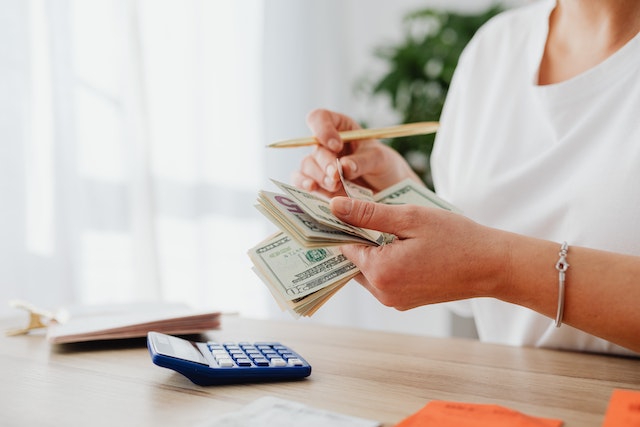
How the closing professional fits into the verification
Ask who will handle settlement and how funds will be received and disbursed. An independent Alabama real estate attorney or other qualified closing professional can explain the proposed funds flow and check who will receive the deed. Request the closing firm’s name and independently look up its contact details before sharing sensitive documents or changing payment instructions.
The Consumer Financial Protection Bureau warns that impostors can send last-minute changes to wire instructions. Its closing-fraud guidance recommends verifying instructions using a trusted number rather than relying on a message that just arrived. That caution matters even when the homeowner is receiving sale proceeds rather than wiring a down payment.
A funding letter does not replace the final settlement statement. Before signing the deed, understand the gross price, mortgage payoff, taxes, negotiated charges, and how the net proceeds will be delivered. For those steps, read Bama’s explanation of Alabama closing paperwork and timing.
Red flags that call for more questions
Be cautious if the buyer refuses to identify the purchasing party, supplies evidence that is clearly outdated, pressures you to sign without reading the agreement, or asks you to pay unusual up-front fees to receive a cash offer. Discrepancies do not prove fraud, but they are reasons to seek independent review.
A screenshot can be altered, so it should not be treated as stronger proof simply because it displays a large figure. Equally, an investor who declines to send a full bank statement is not automatically unreliable; confidential information can be verified through a professionally acceptable alternative. Look at the entire transaction rather than a single red flag.
If a buyer repeatedly changes the proposed purchaser or settlement date, ask whether financing, assignment, title questions or inspections explain the changes. Some delays are harmless; others affect whether you can plan a move or stop carrying expenses. Request any changed commitments in writing.
Illustrative example: the offer is higher than the verified cash
Assume, only for illustration, that an investor signs an offer of $185,000 for an Alabama house and provides a statement showing $120,000. The difference is $65,000. The statement might cover only one account, or the investor may have a separate lender or business partner. The seller should ask for evidence explaining how the remaining funds will be available by closing, not assume either that the offer is valid or that the buyer is a scammer.
The $185,000 and $120,000 figures are hypothetical and are not Alabama pricing benchmarks or examples of Bama’s actual transactions. A seller can also compare the financial certainty of two offers alongside repair requests, contingencies, earnest money and the net proceeds. Our cash-offer evaluation guide covers the separate question of whether an offer makes economic sense.
A practical verification checklist for Alabama homeowners
- Obtain a signed, specific written offer and identify the actual contracting entity.
- Ask for recent, relevant evidence of available funds, with reasonable privacy protections.
- Confirm whether the buyer is using existing cash, a lender, or an assignment arrangement.
- Have a qualified closing professional explain earnest money, title and final payment.
- Record the inspection deadline, financing conditions if any, and closing date.
- Verify closing-office contact information using a source you found independently.
- Ask what happens under the signed agreement if the buyer does not fund the sale.
What if the buyer refuses to provide documentation?
You do not have to accept an unsupported claim of available cash. Ask whether the buyer will allow a mutually trusted closing professional to verify appropriate evidence confidentially. If not, you can request stronger contractual protections, compare another offer or decline. The right response depends on your circumstances and the strength of the full proposal.
A seller in an urgent situation should be particularly careful about promises of a guaranteed closing. Fast completion is valuable only if the buyer can perform. The trade-off is not simply ‘cash versus agent’; it is the certainty of each offer after you understand all material conditions.
Frequently asked questions
Is a proof-of-funds letter legally guaranteed?
No. It is supporting evidence, not a promise from a bank to wire settlement funds. A buyer’s finances may change between the document date and closing.
Must a cash investor disclose every account number?
Not necessarily. Reasonable redaction helps preserve privacy. Ask a qualified settlement professional what reliable verification is appropriate for the proposed deal.
Does proof of funds mean the buyer has offered a fair price?
No. Funding capacity and offer value are separate issues. You can compare the net price, obligations and timing of each offer.
Can I request an as-is offer after checking these details?
Yes. If you want to explore that option, you can request an Alabama property evaluation without assuming that any cash sale is automatically the best choice.